
Invite Them to Stay for Tea
Triggers, AI, and Everyday Awakening

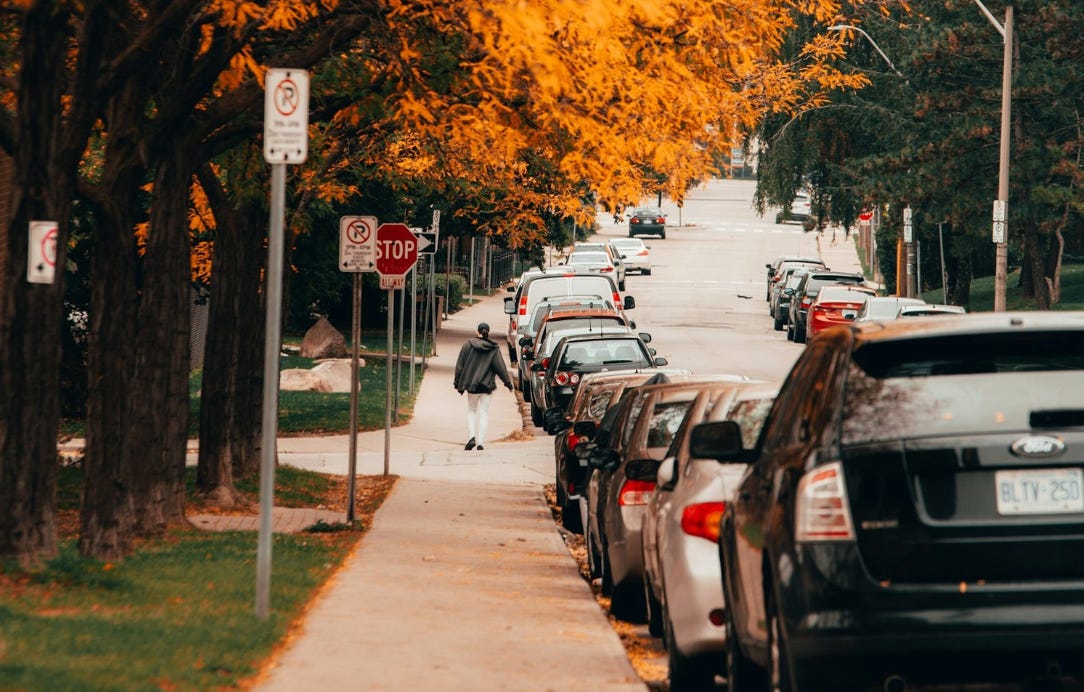
I live in a neighborhood with narrow streets lined with parked cars. Whenever I drive, I inevitably meet another car head-on, and someone has to pull over. I was raised to yield if I have space, and to wave thank you when someone lets you pass. But lately, most drivers just plow ahead, forcing you to move. There’s no gesture or acknowledgment. When I pull over to let them pass, most don’t wave. They just stare straight ahead. It’s a small thing, but if I’m being real—every time it happens, my blood boils a little. I try to let it go. I try not to take it personally. But it’s a daily reminder that the neighborhood is changing, unspoken rules are shifting, and what we expect from each other is being redefined.
There’s a curious kind of wisdom that reveals itself only in the messiness of living, in those moments when something or someone gets under my skin. It might be a clash of personalities, a charged group dynamic, an offhand comment, or the way certain situations quietly reinforce who holds power and who yields. In the past, my first impulse was to freeze a little, go quiet, or replay the moment in my mind. These days, though, when I pause, step back, and stay with the discomfort—when I set my ego aside, become present in the moment and listen—something unexpected happens: beneath the trigger, I often find a teaching. Sometimes, even a teacher.
It might be a person. It might be the group, the unspoken rules, the way power moves in a room. These days, I don’t find myself blaming or needing to point the finger. Instead, I just notice the sensation, let myself feel it, and get curious about what it might be showing me. If I soften and stay with the feeling, I start to see what the trigger is illuminating: a boundary I haven’t set, a value I care about, a pattern I’m no longer willing to repeat. It wasn’t always this way, but over time I’ve learned that what stirs me usually has something important to reveal.
When I really pause with that flash of irritation, when I let the “teacher” step in, I see how much I long for a sense of shared humanity, for the small gestures that make a place feel like home. Maybe the lesson is about boundaries, or the ache of watching a familiar culture shift. Maybe it’s just about practicing kindness for its own sake, even when no one notices. Or maybe it’s a reminder that I can only control my own actions, that I get to choose whether to keep waving, to keep making space, even as the world around me changes.
The discomfort, in the end, isn’t just about someone else’s rudeness. It’s an invitation: to notice what matters to me, to grieve what’s shifting, to reaffirm the kind of neighbor, the kind of person, I want to be.
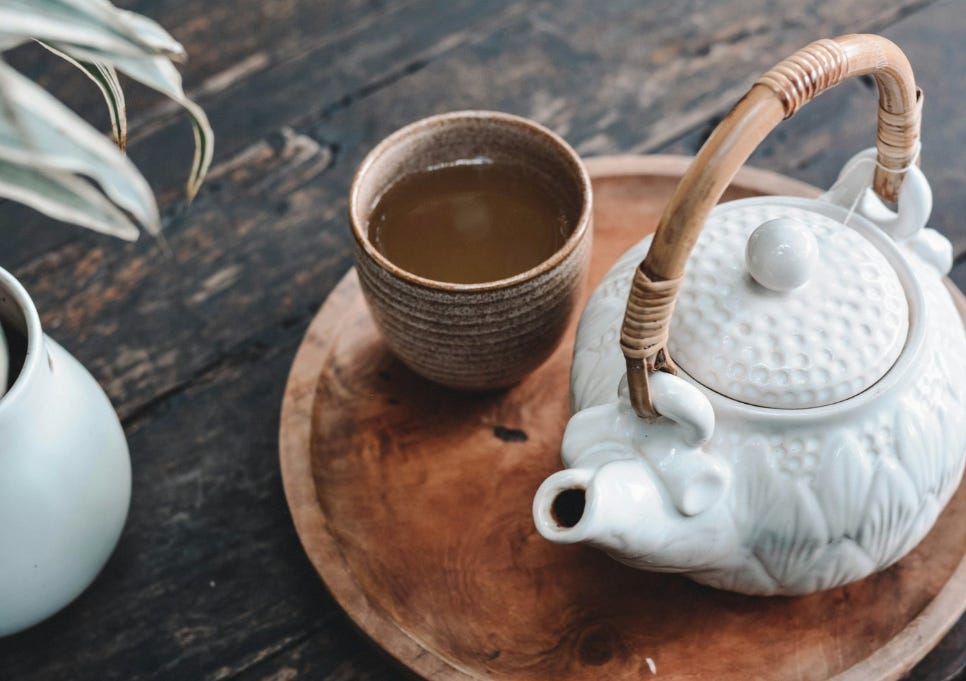
Wisdom traditions remind us that what provokes us is often what’s calling for healing or reclamation. Our discomfort and reactions are signals that guide us towards what matters. In Tibetan Buddhism, there’s a classic story about Milarepa, the great yogi and poet. While meditating alone in his cave, he was visited by terrifying demons, which represented his own fears and unresolved patterns. Instead of running or fighting them, Milarepa greeted them with openness. “You are welcome here,” he said. “Stay as long as you like.” In some versions, he invites them to sit and have tea. Meeting his demons with presence and curiosity, he found that they gradually lost their power and disappeared. The story is a living metaphor for how we can relate to our own triggers and discomforts: by turning toward them, inviting them to stay for tea.
This is the terrain of real growth. The complexity of everyday life. The unexpected, the messy, the gritty, calling us to wake up, examine our assumptions, and find a deeper layer of self-trust.
All of this: the tension, the discomfort, the chance to grow. It’s only possible because real life pushes and pulls at us. But what happens when we’re met with a reflection that’s perfectly smooth, one that never pushes back?
Now, there’s a new kind of mirror in the room: one made of code.
AI can echo my thoughts and reflect back my patterns. It’s a remarkable tool for self-awareness. A mirror that doesn’t judge, push back, or bring its own wounds or needs. At first, this seems like a relief: no confrontation, awkwardness, or unpredictability. But over time, I notice what’s missing.
For all its capabilities, the AI mirror rarely triggers me. It doesn’t challenge my ego, disrupt my narratives, or bring me to the raw edge where real learning happens. There’s no resistance, no surprise, no invitation to tea. It reflects me back to myself, but without any real friction. I’m never truly pushed, never brought to that threshold where growth and transformation become possible.
So I keep returning to my own reactions, seeing them as invitations rather than flaws to fix or signs of failure. Every time I feel the pull toward judgment, resistance, or discomfort, I remember: this is where the teaching lives. This is what it means to be alive in the company of other living beings. The digital mirror is useful, but it cannot offer what the living, breathing, messy world can—a place at the table for everything we feel, every demon we meet, every cup of tea we share.
Maybe this is the real practice: to put the kettle on, invite our triggers to stay for tea, and listen for what they have come to teach us.
If you enjoyed this piece, you can support my work by becoming a free or paid subscriber, or by buying me a cup of tea. 🍵🙏🏼
Everything in life is based on education, especially the kind that comes from “home”. Many people get lost in arrogance and arrogance that lead to absolutely nothing. In the world and at the present time, it is not advisable to arrange or accept confusion. When we learn that ignoring a situation is part of the defense strategy, as well as education.
Letting go of the EGO is not easy, it has to be a daily and continuous exercise in all segments of life. If a certain person has not been educated, let us be the ones who show how it is done. As a karate practitioner, hierarchy is a primary lesson, respecting your elders, having discipline does not mean that we should stop being a fighting warrior (the spirit of aggression is part of martial art). See how everything is inserted into the principles of education.
There is a saying that when one does not want, two do not do (fight), within this context, there is no confusion and conflict. Consider yourself on the path to elevation whoever thinks or acts in this way, because peace saves! In my opinion, AI has no influence whatsoever on my personal actions, although it is a powerful tool for exploring paths that the human mind has never thought of or imagined.
Finally, I repeat, without basic and fundamental education it is difficult to maintain the line of rationality.
Thank you for the nice invitation and the tea ☕! Hug 🤗
OPoet@LuízKon'Z
You are well on the path. I offer this poem that resonates with your post.
Listen Learn Love
Capturing attention, scattered by the reality of life
Seeking balance, well on the path
Glowing from the glimpse of love
Listen, learn, love
Souls unite, glowing brighter, our triggers get lighter
Love insulates for obstacles that persist
My love, a glimpse of love, insists