
From Force to Flow
A reflection on slowing down, growing older, and returning to what's real

It’s hard for me to admit, but lately my body has been asking me to slow down. I’ve been hearing the signals for months: aching joints, sore muscles, fatigue after exercise, and less energy and vitality in general. I’m in the final phase of perimenopause, and over the past two years, much of who I’ve been on a physical, mental, and emotional level has changed in a way that’s hard to put into words. I feel like a different person, and the reality of aging has really hit home.
I’ve been active my entire life. Skiing was a passion. I played on sports teams. I’ve always loved walking, hiking, and traveling. I’ve had dogs for most of my life. Moving my body has always been how I stay grounded. So when my knees started to ache after what used to be an average walk, I didn’t want to slow down. I assumed it would pass like it always did before. I pushed through. But it didn’t pass. I started waking up stiff and sore. It hurt just to rise from a chair. Something had changed. My body wasn’t bouncing back the way it used to.
A while back, I was in my acupuncturist’s office, talking about how tired I’d been. I told her I was considering starting a new business. She paused and said, “What would it look like to honor the energy you have now, at this stage of your life? You’re not 30 anymore. You don’t have the same jing.” (Jing, in Chinese medicine, is a form of foundational life force, something that naturally decreases with age.)
Her words really touched something in me. What would it feel like to honor the energy I have now, at 56? I’ve lived a full life. I’ve raised a daughter, built multiple careers, navigated divorce, traveled around the world, guided thousands of people through healing, and carried the weight of developmental trauma and the loss of three parents. I’m stronger because of what I’ve lived through. But that life force—my jing—has shifted. I knew that what was calling now wasn’t to squeeze more out of myself, but to let a new way of being in relationship with my life emerge from within.
In recent years, I’ve tried to adapt. I’ve built daily practices like yoga, qi gong, and meditation into the foundation of my day. I’ve become more intentional about food, sleep, and how I spend my energy. But if I’m honest, slowing down the physical activity has been the hardest. For me, taking walks has been as essential as drinking water.
This isn’t the first time my body has tried to get my attention.
Twenty-five years ago, I went through something similar, though I didn’t recognize it at the time. I was working at a tech company, overseeing many aspects of operations. It was constant. My mind was always switching gears, tending to multiple branches of the business, solving problems, holding things together. I could do it, and I was good at it. But it came at a cost.
Eventually, my body started to break down. I developed chronic pain. It kept building, and I kept working. Doctors couldn’t find anything wrong. I cut out certain foods that were thought to be irritating. But the pain continued to worsen.
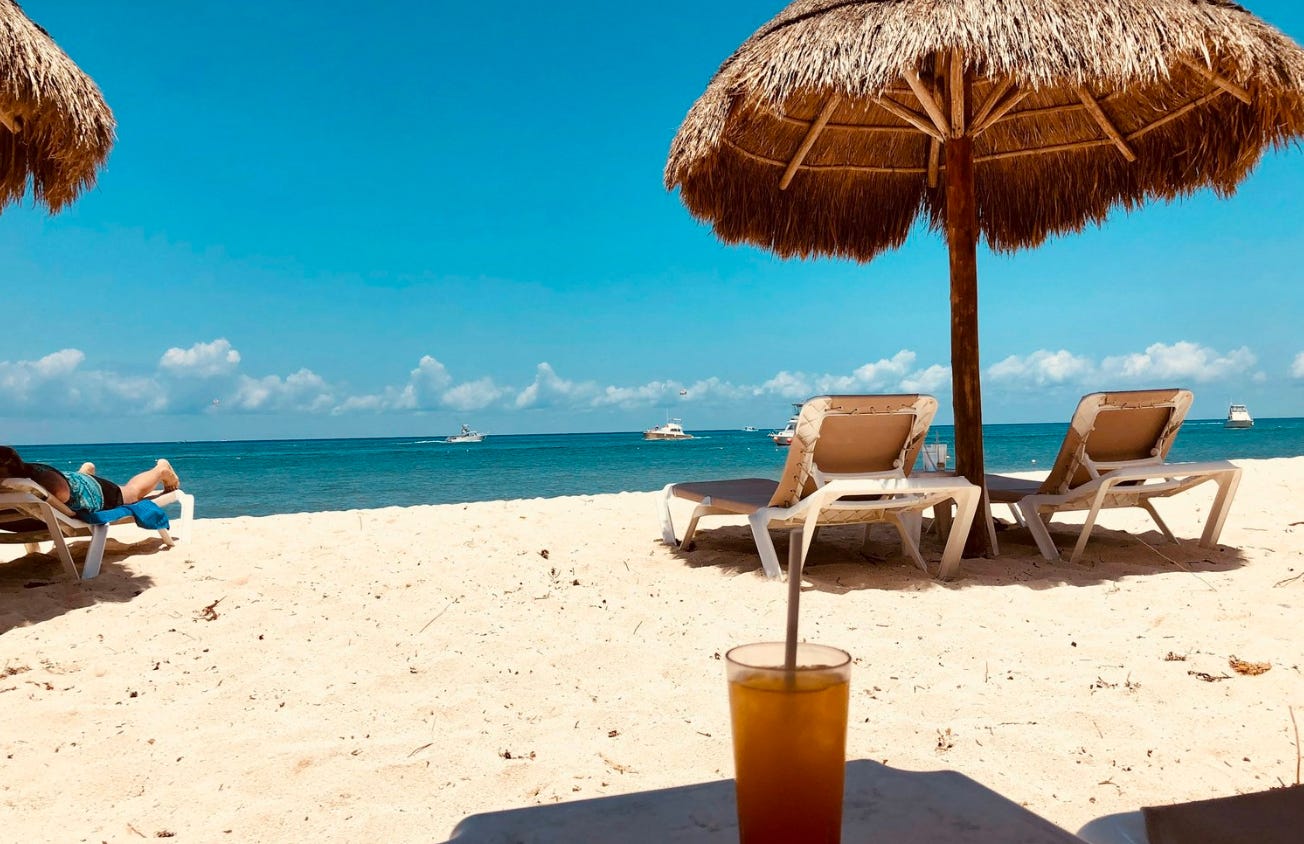
Then I took a week-long vacation to Mexico. And on the very first day, after swimming in the ocean, I noticed that the symptoms had vanished. I ate whatever I wanted. And yet the pain was gone. It only returned when I went back into the office that following Monday.
It became clear to me that it was something about the job. At the time, somatics, nervous system regulation, trauma-informed anything—these weren’t fully formed ideas in my field yet. All I knew was that I had to leave. So I did. And that solved the problem…for a while.
I thought leaving the job would be enough. And in some ways, it was. The relief was real. But relief isn’t the same as repair.
I had changed my environment, but not the way I lived inside myself.
I still didn’t know how to stay in relationship with my body, especially in the face of pressure, responsibility, or fatigue. I knew how to hold it together, and I knew how to escape when things got too overwhelming. But I didn’t yet know how to stay with myself while staying inside my life. How to move differently without checking out or powering through. How to honor my body’s signals without collapsing or giving up. I had no real model for any of it.
Looking back, I can see the pattern that began to form: making things work at the cost of my own well-being. Moving past my limits because I could—because I was capable, because someone needed me, because that’s what strong people do. I wouldn’t have called it “force” back then. I might have called it resilience, or maybe just being responsible or dutiful.
But underneath it, I was still pushing past myself.
It’s only now, all these years later, that I can name it for what it was: not weakness or failure, but disconnection. A body trying to be heard. A nervous system asking to be met.
It’s not that I didn’t already know this. Like the cobbler whose children have no shoes…
I’ve spent years practicing and teaching Craniosacral therapy, a gentle bodywork practice rooted in deep listening and presence. It’s not about fixing or forcing. It’s about attuning to the body’s subtle rhythms, sensing when something wants to shift, and allowing space for what’s ready to release. In that stillness, intelligence emerges—not because we make it happen, but because we make room for it. I’ve accompanied countless clients through this deep process: out of tension and into trust, out of holding and into relationship.
But this season of my life is asking me to live it in a new way. Not in the treatment room with a client on the table, but in the soft reckoning of my own changing body.
This isn’t a new concept. But it’s a deeper layer. A new edge. An invitation to truly walk the path I’ve been holding space for all these years.
What I’m starting to see more clearly now is that this isn’t just personal. It’s not just about my body, or this phase of life, or even the years I spent ignoring what I needed. It’s part of something much bigger—a cultural pattern we’ve all inherited.
We live in a world that rewards force. That sees exhaustion as a badge of honor. That glorifies pushing through without asking what it costs. So many of us have learned to override our natural rhythms, and not from a broken place, but because we were never shown another way.
More and more, I think this is the threshold we’re all approaching: learning to move not from urgency, but from truth.
What’s changed isn’t just my knees, or my energy levels. It’s how I’m choosing to relate to them.
I’m learning what it means to be in relationship with the daily realities of being in my body—with my walks, the food I eat, the beginning of each day. The way I speak to myself when I feel tired.
This isn’t about doing less, but about being more present with what I do. It’s more honest, and more responsive.
The invitation isn’t to stop living. It’s to live from a place that honors who I am now. Not who I used to be, or who I think I should be. But who I am, in this moment, with this body, on this path.
Over the years, I’ve heard many people who’ve built their lives on strength, optimization, and resilience speak the same tender realization: “I don’t know how to slow down without feeling like I’m failing, or risking everything I’ve worked so hard to build. But I don’t want to do it anymore.”
I’ve come to understand that feeling. I’ve lived it. What we call aging, or injury, or burnout, is sometimes just the body finally saying: no more. Not as punishment, but as realignment. As invitation.
I’m no longer interested in pushing through. I’m interested in what becomes possible when I don’t.
I’ve started walking less—fewer steps, shorter routes. And my knees don’t hurt anymore. Not because I fixed them, but because I’m finally listening.
I don’t know exactly what this next chapter looks like. But I know it begins here: with presence, permission, and a softer kind of strength.
This feels like the real work now.
Letting my body lead, and trusting that it knows the way.
If you enjoyed this piece, you can support my work by becoming a free or paid subscriber, or by buying me a cup of tea. 🍵🙏🏼
This moved through me like a prayer I didn’t know I’d been whispering. *“Relief isn’t the same as repair”—*yes, yes, yes. The way you speak of jing and force, of resilience and listening, makes room for a kind of soft power that our culture so often overlooks. Thank you for giving language to the sacred shift from urgency to presence. You’re not just telling your story—you’re charting a path for the rest of us learning to move from force to flow.
This is so good, thank you. I'm going to spend some time reading this again ❤️